The Aqusense platform

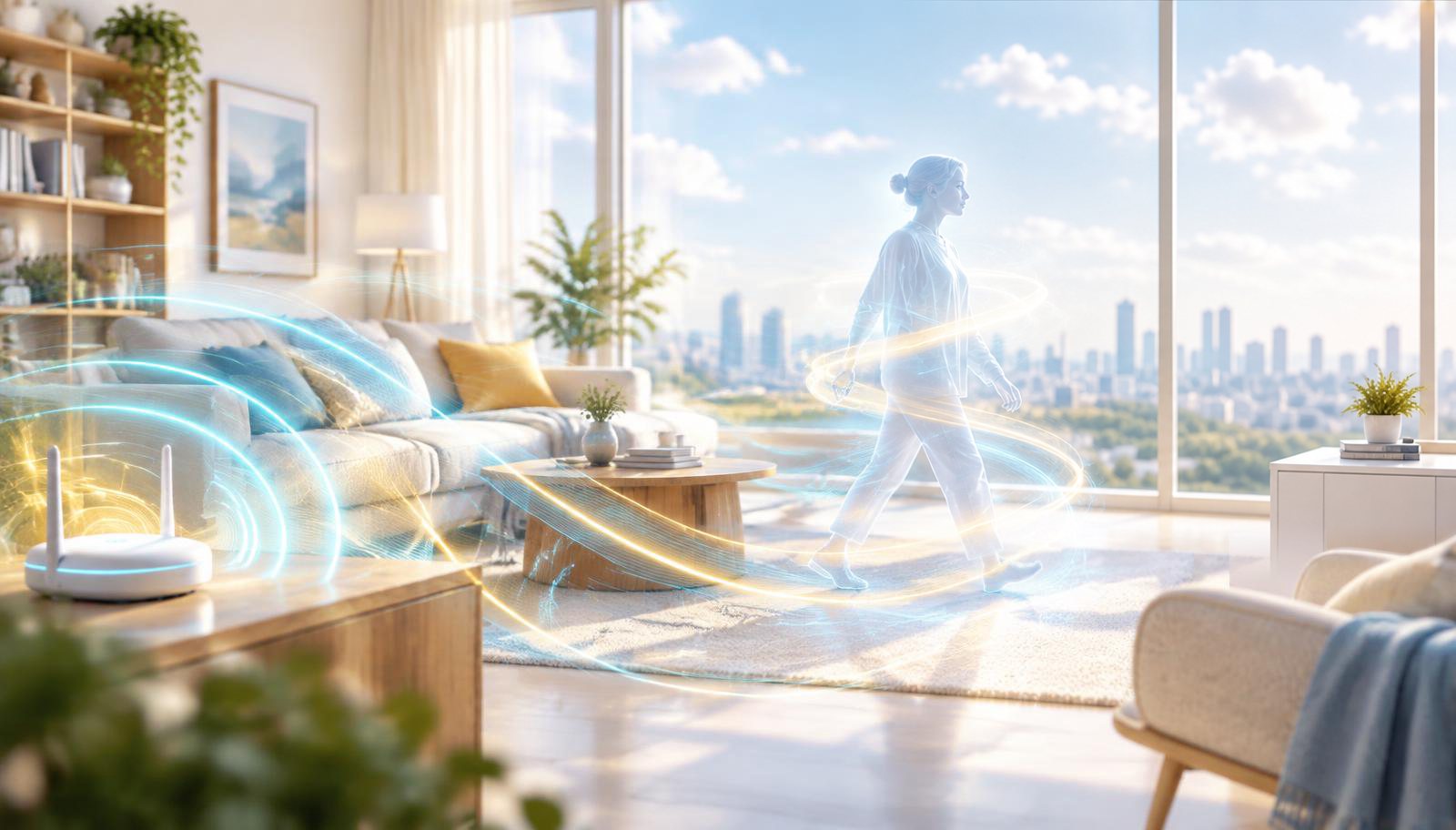
    Wi-Fi already fills every room. We turn it into understanding.

    When people move, they change how Wi-Fi signals travel through a space. Aqusense's patented AI reads those changes as presence, motion and a live map of how the space is used.

    Busy open-plan office with people at desks, in focus pods and a lounge, two walking down the aisle and two delivery robotsFocus pods · 2 of 2 in useDesk zone A · 3 of 5 desksDesk zone B · 4 of 5 desksLounge · 4 peopleWindow desks · 5 of 9 desksMeeting room · 1 of 8 seats · set backR1 · possible occupied-area responseR2 · conceptual route
    Illustrative · Floor 4 · PresenceSimulated data · conceptual integrations

    Presence · Human Presence Detection. Every person changes how Wi-Fi travels through a space, even sitting still. Aqusense reads that as presence, desk by desk and room by room, from the Wi-Fi you already have. No cameras, no wearables.

    People (est.)25across the floor
    Desks in use12 of 19seated presence, not bookings
    Focus pods2 of 2both in use

    Powered by patented AI

    One platform. Three sensing layers.

    Understand when people are present, how activity moves through a space, and how that space changes over time. Aqusense combines patented AI and advanced signal processing to turn ambient Wi-Fi signals into spatial intelligence for your buildings, connected systems, and physical AI applications.

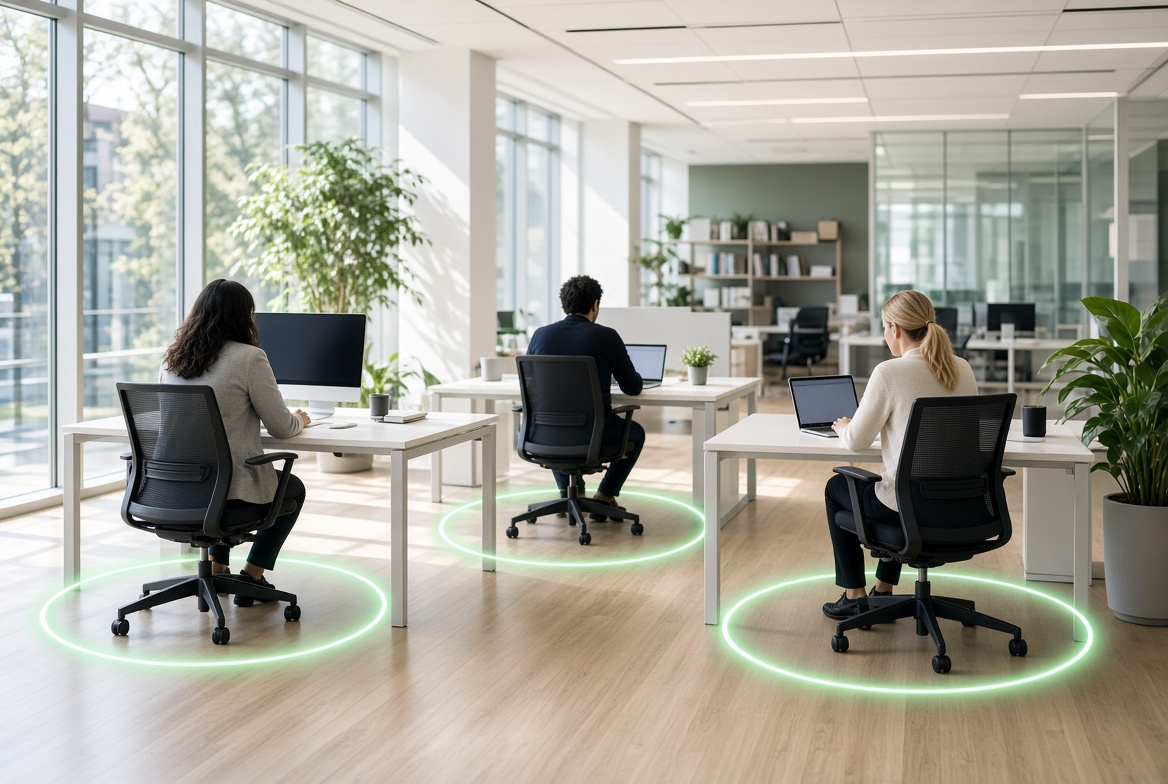
    Three people seated at office desks with glowing sensing rings indicating human presence

    01 · Human Presence Detection

    HPD™ over Wi-Fi

    Know when a space is in use.

    Passively detect human presence by interpreting subtle disruptions in radio-frequency signals. Give your teams and connected systems a clear understanding of whether a monitored space is occupied, without cameras or wearables.

    What it reveals

    • Human presence in monitored rooms and zones.
    • Occupied or vacant states.
    • Changes in presence over time.

    Put it to work

    Inform lighting, HVAC, room management, and security workflows with context about when spaces are actually being used.
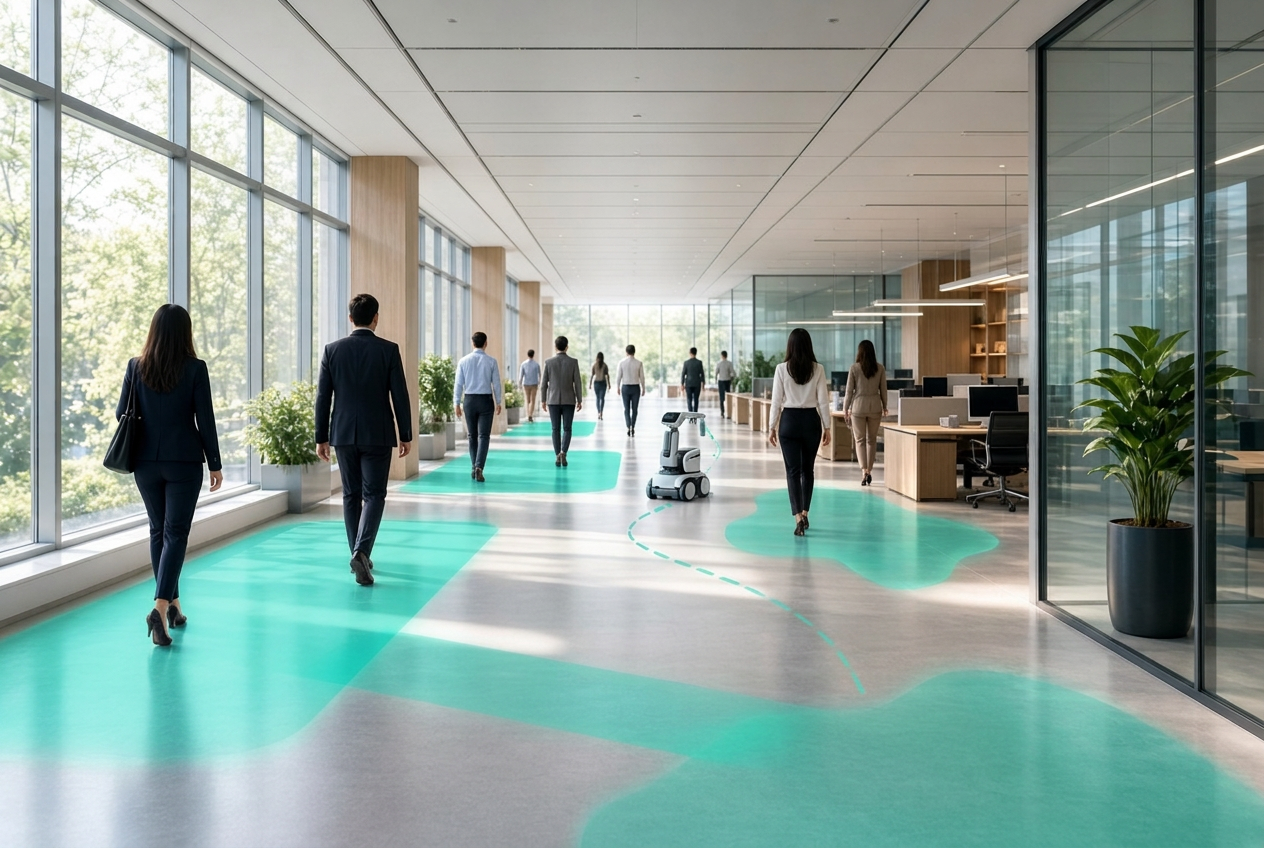
    Office corridor with area-level sensing fields and a conceptual robot route; people are unmarked

    02 · Human Motion Sensing

    HMS™ over Wi-Fi

    Understand how activity moves through your space.

    Detects human movement and activity patterns across a space, providing real-time spatial awareness that can help robots and intelligent building systems respond to changing occupancy and movement conditions. Core sensing requires no cameras or wearables and does not identify or persistently track individuals.

    What it reveals

    • Movement and activity intensity.
    • Patterns of movement over time.
    • Area-level activity, not individual trajectories.

    Put it to work

    Potential integrations could help autonomous robots, building systems and wayfinding respond to occupied areas. Integration behaviour and performance require validation; the illustration is conceptual.

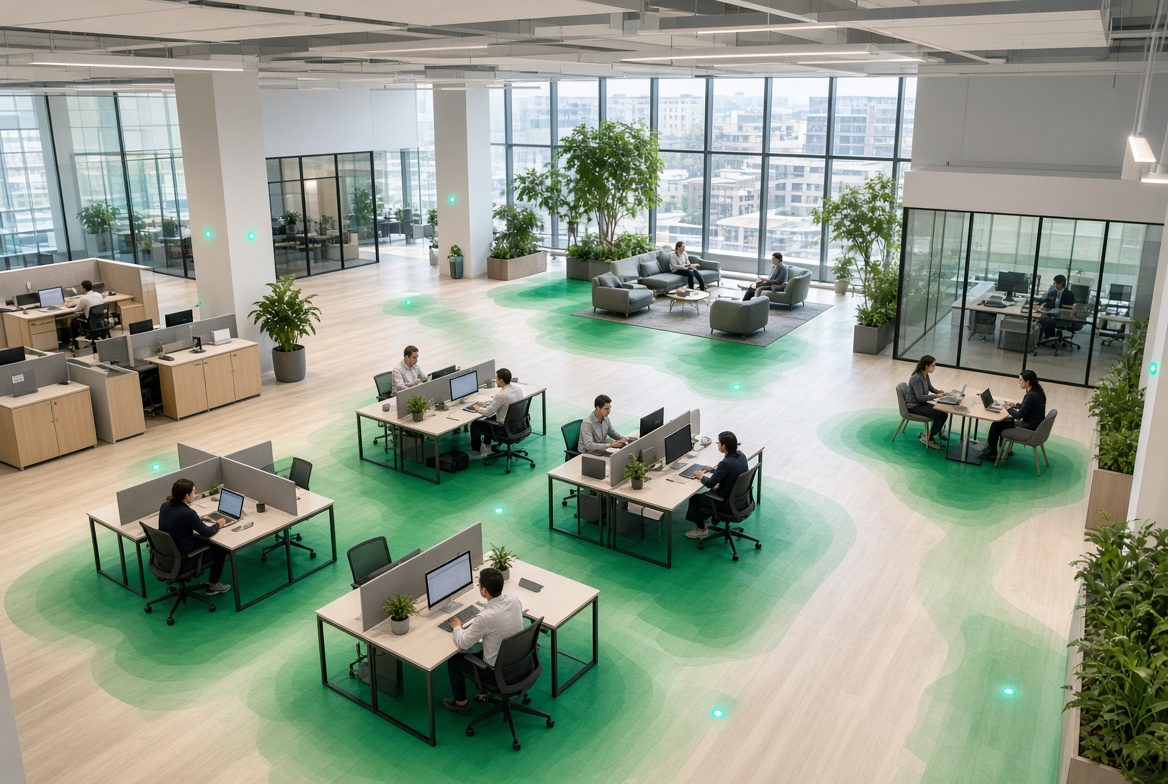
    Open-plan office with occupied desks and meeting areas highlighted by green spatial-awareness zones

    03 · Wi-Fi Environmental Awareness

    WEA™

    See how your space changes over time.

    Turn ambient Wi-Fi signals into a continuously updated view of your physical environment. Understand occupancy patterns, spatial dynamics, and changes in how spaces are used across buildings, facilities, and campuses.

    What it reveals

    • Patterns of occupancy and space use.
    • Changing spatial dynamics.
    • Continuous spatial context, live and over time.

    Put it to work

    Support utilization analysis, space planning, and portfolio decisions. Give connected applications and physical AI the spatial context to understand changing environments.

    From signal to intelligence

    01

    Ambient Wi-Fi

    Signals already moving through the space

    02

    PoE sensor

    Captures how those signals change

    03

    Aqusense AI

    Separates people from noise, room from corridor

    04

    Spatial model

    Presence, motion and patterns, live and over time

    05

    Your systems

    Dashboards, APIs, building and security tools

    Technical overview

    Built for enterprise networks.

    Designed to be installed, secured and managed like the rest of your network estate.

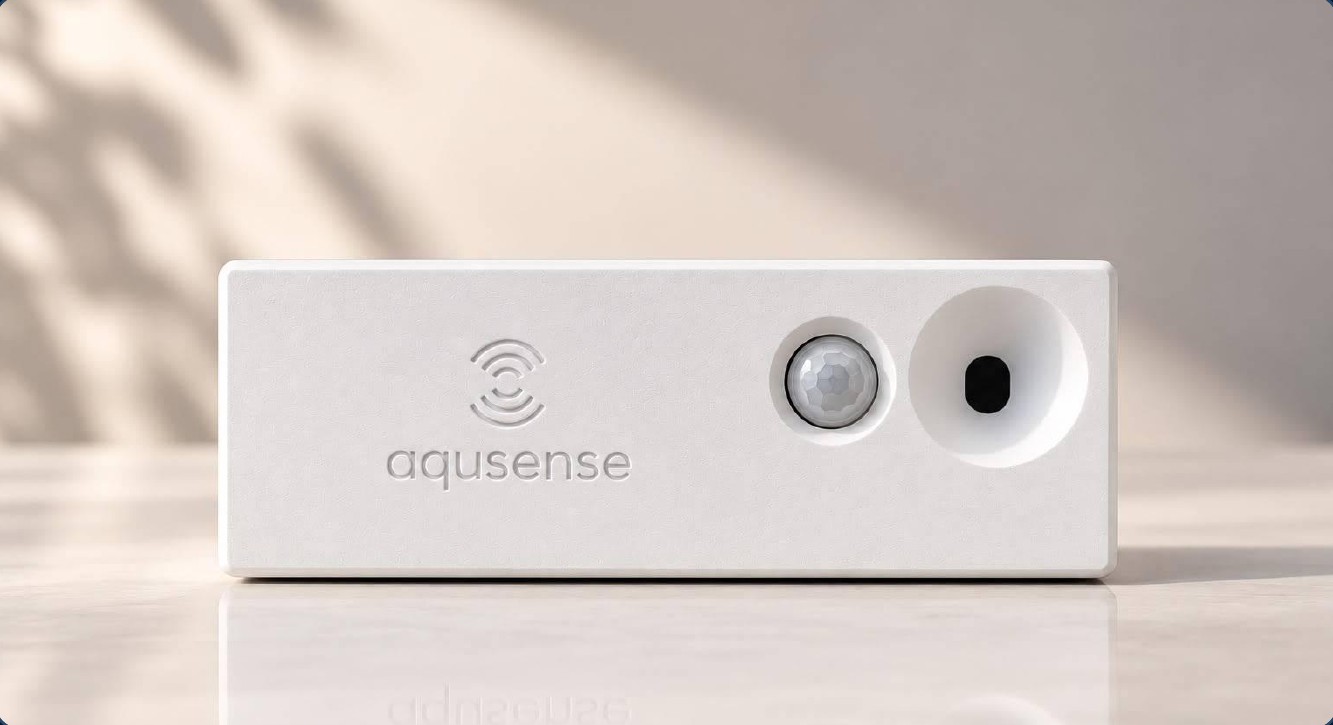
    Complete Aqusense PoE sensor
    Power & data
    Power over Ethernet (PoE) — one cable, under 1.5 W per sensor
    Coverage
    Planning assumption up to ~1,500 ft² of open area per sensor; one per individually tracked room
    Detection
    Presence, motion activity and area-level patterns; not individual trajectories
    Accuracy
    Measured and reported during your pilot
    Mounting
    Any Ethernet port, ceiling or under-a-table placement, confirmed in your site survey
    Integrations
    REST API · MQTT · Splunk; BMS protocols confirmed during scoping
    Security
    Encryption, authentication and update requirements reviewed with your IT team before a pilot
    Standards
    IEEE 802.11bf, the Wi-Fi sensing amendment ratified in 2025. Wi-Fi Alliance member.

    Integrations

    Occupancy where your teams already work.

    AI agents

    Stream structured presence events into the agents and models your teams already run.

    Splunk

    Presence events alongside security and IT data.

    Building systems

    Occupancy signals for HVAC and lighting control, with integration confirmed during scoping.

    API

    Stream or query presence and motion for your own apps.

    See it on your own floor.

    Get an estimate in a minute, then book a demo.